DB 상에 등록되어 있는 치킨의 목록을 나타내는 기능을 구현하였다.
CREATE TABLE Chicken(
	code NUMBER GENERATED ALWAYS AS IDENTITY primary key,
	name varchar2(100) not null unique,
	price integer not null
);
<Chicken.SQL>
기본키를 자동생성함으로써 겹치는 일이 없도록 만들었다.
package vo;

public class Chicken {
	private String code;
	private String name;
	private int price;
	public Chicken(String b, int c){this.name = b; this.price = c;}
	public String getCode() {
		return code;
	}
	public void setCode(String code) {
		this.code = code;
	}
	public String getName() {
		return name;
	}
	public void setName(String name) {
		this.name = name;
	}
	public int getPrice() {
		return price;
	}
	public void setPrice(int price) {
		this.price = price;
	}
}
VO file을 만들고 getter와 Setter를 설정해주었다.
package dao;

import static com.smc.db.JdbcUtil.*;


import java.sql.*;
import java.util.ArrayList;
import org.springframework.stereotype.Repository;


import vo.Chicken;

@Repository
public class ChicDAO
{
	Connection con;
	private static ChicDAO cDAO;


	public void setConnection(Connection con) { this.con = con;}

	public static ChicDAO getInstance() {
		if(cDAO==null) cDAO = new ChicDAO();
		return cDAO;
	}

	public ArrayList<Chicken> selectCList(){
		PreparedStatement pstmt = null;
		ResultSet rs = null;
		ArrayList<Chicken> CList = null;
		try {
			pstmt = con.prepareStatement("SELECT * FROM chicken");
			rs = pstmt.executeQuery();

			if(rs.next()) {
				CList = new ArrayList<>();
				do {
					CList.add(new Chicken(rs.getString("name"),rs.getInt("price")));
				} while(rs.next());
			}
		} catch(SQLException e) {
			e.printStackTrace();
		}finally {close(rs); close(pstmt);}

		return CList;
	}

	public int insertChicken(Chicken chic) {
		PreparedStatement pstmt = null;
		int insertCount = 0;
		String Sql = "";

		try {
			Sql = "INSERT INTO Chicken(name,price) VALUES(?,?)";
			pstmt = con.prepareStatement(Sql);
			pstmt.setString(1, chic.getName());
			pstmt.setInt(2, chic.getPrice());
			insertCount = pstmt.executeUpdate();
		}catch(SQLIntegrityConstraintViolationException e){
			System.out.println("이미 같은 정보가 있습니다.");
			return -1;
		}catch(SQLException e) {
			e.printStackTrace();
		}finally {close(pstmt);}

		return insertCount;
	}
}
DAO file에서 리스트 로딩함수와 치킨 등록 함수를 선언하였다.
Spring framework의 Autowired annotation을 사용하고 싶었는데 잘 안되어서 그냥 객체를 선언했다.
package service;

import static com.smc.db.JdbcUtil.*;
import java.sql.Connection;
import java.util.ArrayList;


import org.springframework.stereotype.Service;

import vo.Chicken;
import dao.ChicDAO;

@Service
public class ChickenListService {
	public ChicDAO chicDAO = new ChicDAO();

	public ArrayList<Chicken> getChickenList(){
		chicDAO = ChicDAO.getInstance();
		Connection con = getConnection();
		chicDAO.setConnection(con);
		return chicDAO.selectCList();
	}
}
서비스 클래스는 DAO객체에 Connection 객체를 넣어주고, DB로부터 ArrayList 형태의 치킨 정보를 받아오는 역할을 수행한다.
package com.smc.test;

import vo.Chicken;


import service.ChickenListService;

import java.util.ArrayList;


import javax.servlet.http.HttpServletRequest;

import org.springframework.beans.factory.annotation.Autowired;
import org.springframework.stereotype.Controller;
import org.springframework.web.servlet.ModelAndView;
import org.springframework.web.bind.annotation.RequestMapping;


@Controller
public class ChickenListController {
	@Autowired
	private ChickenListService chickenListService;

	@RequestMapping("/CList.chic")
	public ModelAndView view(HttpServletRequest request) {

			ArrayList<Chicken> temp = chickenListService.getChickenList();
			try {
				request.setAttribute("chic", temp);
			}catch(Exception e) {
				e.printStackTrace();
			}
			ModelAndView mav = new ModelAndView();
			mav.setViewName("/CList");
			return mav;
	}
}
컨트롤러 클래스는 브라우저가 사용자의 경로에 있는 View에 도달할 수 있게 해주는 역할을 수행하며 사용자의 요청을 받고, 응답하는 역할을 수행한다. 나는 ArrayList를 HttpServletRequest 객체에 저장했다.
<%@ page  import = "vo.Chicken"%>
<%@ page  import = "java.util.ArrayList"%>
<%@ page language="java" contentType="text/html; charset=UTF-8"
    pageEncoding="UTF-8"%>
<%@ page trimDirectiveWhitespaces="true" %>
<!DOCTYPE html>
<html>
<head>
<meta charset="UTF-8">
<title>세상의 모든 치킨</title>
<%
	ArrayList<Chicken> clist =  (ArrayList<Chicken>)request.getAttribute("chic");


%>
</head>
<body>
 <h3>치킨 목록 </h3>
 	<table style="1px solid black; width:30%; height:100px; margin : auto; text-align = center";>
 	<tr>
 		<td>이름</td>
 		<td>가격</td>

 	</tr>
 	<%
 		if(clist!=null){
 			for(int i=0; i<clist.size();i++){

 	%>
 	<form action = "/test/CReview.chic"><tr>
 		<td><% String name = clist.get(i).getName(); out.println(name); %></td>
 		<td><%=clist.get(i).getPrice() %></td>
 		<td><button type = "submit" onclick = "location.href ='CReview.chic'" name = "name" value = "<%=name%>" formmethod = "get">리뷰 쓰기</button></td>
 	</tr>
 	</form>
 	<%
 		}
 	} else{
 	%>
 	 <tr><td colspan="2"> 등록된 치킨이 없습니다. </td></tr>
 	<%
 	}
 	%>


 	</table>

</body>
</html>
컨트롤러에서 보낸 ArrayList를 받아 View로 뿌려주는 역할을 수행하는 뷰 페이지이다.
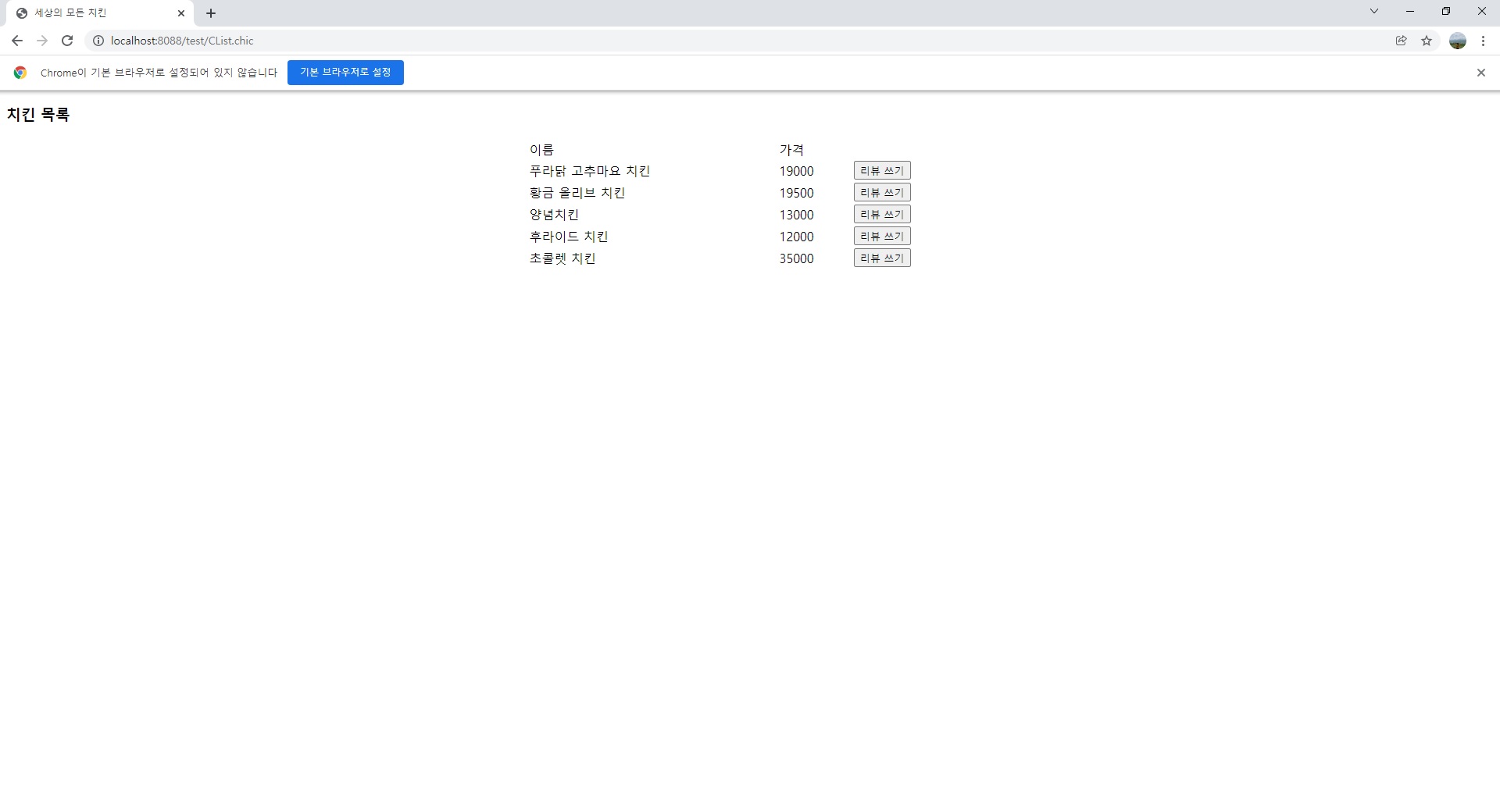
위와 같이 DB에 있는 내용을 잘 보여준다.
'공부 > [Project] 치킨' 카테고리의 다른 글
| 작성된 리뷰 목록을 확인하는 기능 (0) | 2021.12.27 |
|---|---|
| 치킨에 대한 리뷰를 작성하는 기능 (0) | 2021.12.27 |
| 새로운 치킨을 등록하는 기능 (0) | 2021.12.23 |
| javax.naming.NameNotFoundException 오류 해결법 (0) | 2021.12.21 |
| [치킨 프로젝트] Backend 부분 사용 Stack 정리 (1) | 2021.12.21 |


